
Andrea Russi, MSc. Chemical Engineer, PhD. Sustainable Development
Climate Change and Sustainability Expert
LSQA
Animal Protein Production
Beyond sustenance, the intricate process of converting plant-based resources into nutrient-rich proteins has catalyzed economic and societal transformation. As civilizations flourished, the impact of this practice became manifest. Yet, within its progress, a complex tale of environmental repercussions emerged, with methane gas emissions taking center stage as a defining factor in climate change.
Embracing Sustainable Livestock Practices
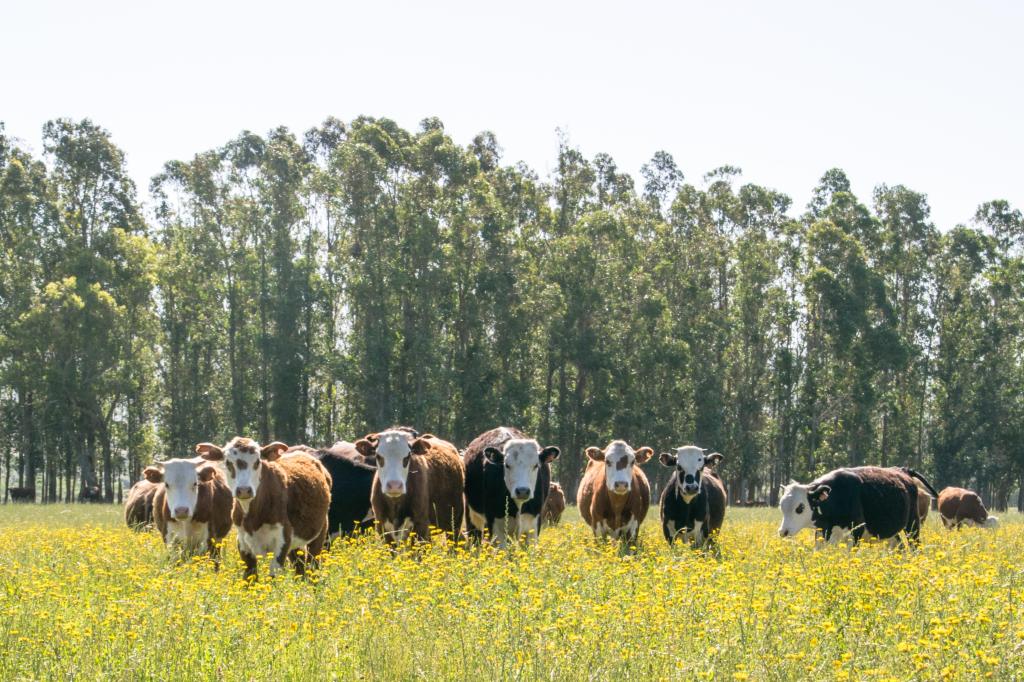
The call for sustainable livestock practices resounds worldwide. Nations globally respond to the urgent need to balance food security and ecological integrity. Uruguay, where livestock is woven into culture and commerce, stands as an inspiration of this transition. Anchored by a robust livestock production system, fortified by a pioneering 100% traceability mechanism and internationally acclaimed protocols, Uruguay charts a course towards sustainable advancement.
Harmonizing Efficiency through Diverse Production Paradigms
Within Uruguay’s livestock sector, a variety of production methods converges, from enduring low-density grazing traditions to precision-driven grain-finishing systems. This reflects Uruguay’s commitment to efficiency. By minimizing fattening periods and optimizing resource utilization, the producers boost progress. Additionally, Uruguay’s adept no-till management of cultivated grasslands introduces an environmental dimension, fostering carbon sequestration and regenerative soil restoration.
Empowering Sustainability through Carbon Footprint Verification
Amid the quest for sustainability, carbon footprint verification emerges as a powerful tool, empowering producers to comprehend and convey their impact. Nevertheless, standardized methodologies often emphasize slaughterhouse activities, sidestepping the intricate dynamics of integrated systems. In response, Uruguayan validation/verification body (VVB) LSQA developed programs based on ISO 14064-1 Greenhouse gases — Part 1: Specification with guidance at the organization level for quantification and reporting of greenhouse gas emissions and removals which embrace the ISO 14067 Greenhouse gases — Carbon footprint of products — Requirements and guidelines for quantification life cycle assessment approach, underpinned by rigorous scientific inquiry. This fusion of precision and pragmatism elevates verification of greenhouse gas inventories services to unprecedented heights.
VVB-Scientific Collaboration
This LSQA experience is an example of synergy between a VVB and scientific rigor. The VVB presented a scientific paper spotlighting diverse life cycle models of livestock production at the International Congress of Life Cycle Assessment (CICLCA 2023). This partnership bridges insightful research and empirical validation. Scientific rigor fortifies modeling criteria, ensuring the environmental coherence of livestock systems before integration into carbon footprint verification programs.

Scientific Validation: Propelling Conformity Assessment Programs
Following this path, a scientific validated program takes the spotlight. In the Uruguayan experience, the approach impelled meat producers to account for emissions and removals across the spectrum of soil-pasture-animal interactions. Supported by scientific validated models, the intricacies of grassland management, feedstock production, energy utilization, and related services seamlessly coalesce into a holistic system. Through this scientific prism, the outcomes of conformity assessments yield enriched environmental declarations that resonate with the narrative of sustainability.
Accredited Third-Party Verification: Realizing the Potential of Innovative Alliances
Uruguay’s journey, exemplifying the value of International Organization for Standardization (ISO) standards enhanced by scientific collaboration, marks a significant milestone. Today, numerous livestock producers with their verified carbon footprint can successfully market their products in Europe, Asia, and the United States, owing to their verified environmental declaration. The partnership between rigorous research and pragmatic conformity assessment services emerges as a potent driver of sustainability. Yet, the true benefits of tangible outcomes remain incomplete without the endorsement of an accredited third-party verification opinion, supporting the environmental declaration. This strategic alliance offers the vital elements of transparency, accountability, and credibility. The Uruguayan experience stands as compelling evidence of how new markets and client requirements can be effectively met through a robust client and accredited-verification oriented approach.
Categories: IAF Members' news
 IAF Outlook