
Laura Monserrat Balderas Sánchez
Liaison Coordinator
entidad mexicana de acreditación, a.c.

In an increasingly interconnected and globalized world, effective management of biological risk has become essential to safeguard public health, worker safety, and the environment. ISO 35001 Biorisk management for laboratories and other related organisations provides a comprehensive framework to address challenges associated with biological risks. In this article, we will explore the importance of obtaining accreditation in accordance with this standard and how it can benefit laboratories and related organizations.
The Context of Biological Risk
Biological risks encompass a wide range of threats, from infectious pathogens to genetically modified organisms. These risks are evident not only in research laboratories and medical settings but also in the food industry, agriculture, and other fields. The spread of infectious diseases and exposure to hazardous biological substances can have devastating consequences for human health and workplace safety.
ISO 35001:2019 and its Significance
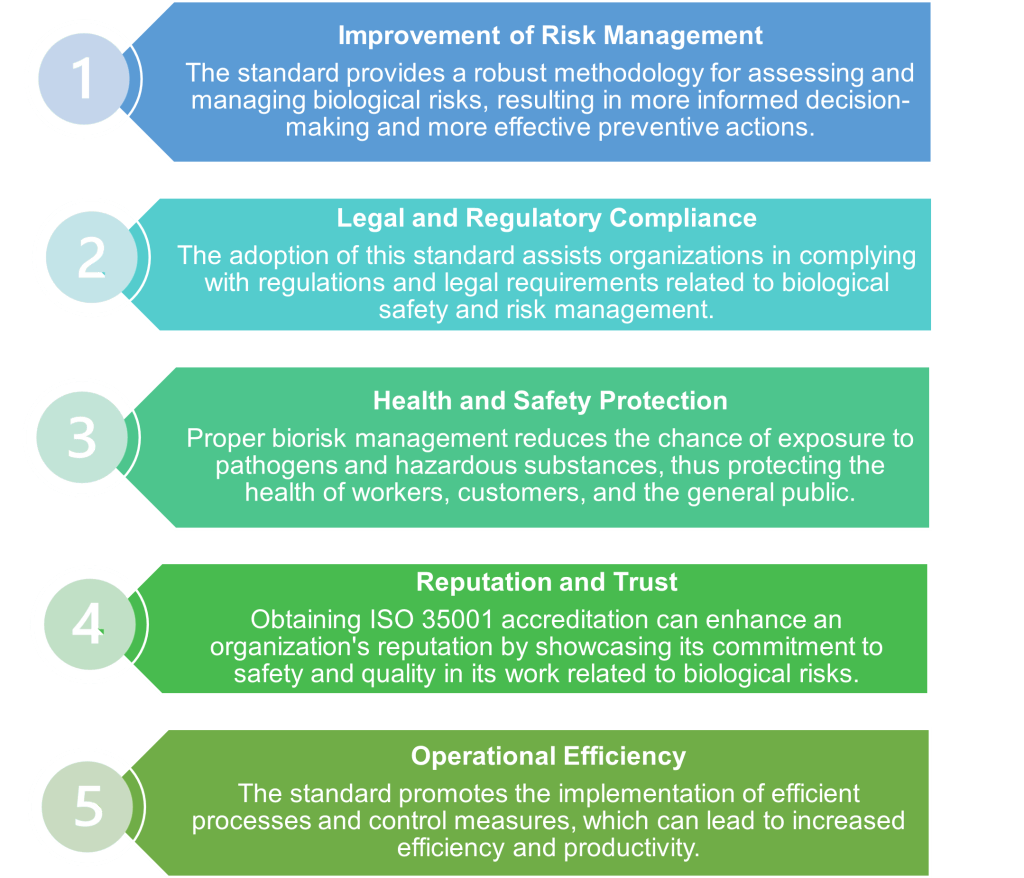
ISO 35001:2019 was developed to provide organizations with a structured framework to identify, assess, and manage biological risks. By obtaining accreditation in accordance with this standard, organizations demonstrate their commitment to safety and responsible management of biological risks. Some of the key benefits of ISO 35001 accreditation include:
Conclusions
ISO 35001:2019 plays a fundamental role in the responsible management of biological risks in laboratories and related organizations. Accreditation according to this standard not only ensures compliance with international standards but also enhances safety, health, and trust in operations related to biological risks. In a world where biological challenges are becoming increasingly evident, investing in biological risk management is essential to safeguard our future.
Categories: IAF Members' news
 IAF Outlook