
Juan Sebastián Parada
Research Coordinator for Economic and Social Studies Related to Quality Infrastructure
ONAC
Daniela Lucía Patiño Mendoza
Research Professional
ONAC
Diego Alejandro Contreras López
Expert Research Professional
ONAC
International trade is of vital importance for the development and economic growth of a country, as it is capable of generating jobs, reducing poverty and increasing economic opportunities[1]. Recently, the significant increase in international trade has highlighted the need to identify factors that promote and facilitate commercial exchanges between countries.
Evolution of international trade volume (billions of USD) 1950-2022

Source: World Trade Organization[2]
One of the most relevant aspects when executing cross-border business transactions is trust. Trust is the backbone of any efficient economic system. It facilitates transactions between individuals, companies and governments; it drives investment and innovation; enables the formulation of effective policies; and generates greater growth[3]. In this sense, trade transactions require trustworthy guarantors; therefore, cross-border security concerning the integrity of conformity assessment results is one of the most relevant aspects in the consolidation of international trade.
In this context, accreditation is the tool used to ensure confidence in international trade transactions. Accreditation is part of the quality infrastructure and guarantees to the actors of the economy that the goods and services traded are in conformity with the standards set forth in the international norms. In other words, accreditation is the attestation by an independent third party (accreditation body) that a conformity assessment body (CAB) is competent to carry out a specific conformity assessment task.
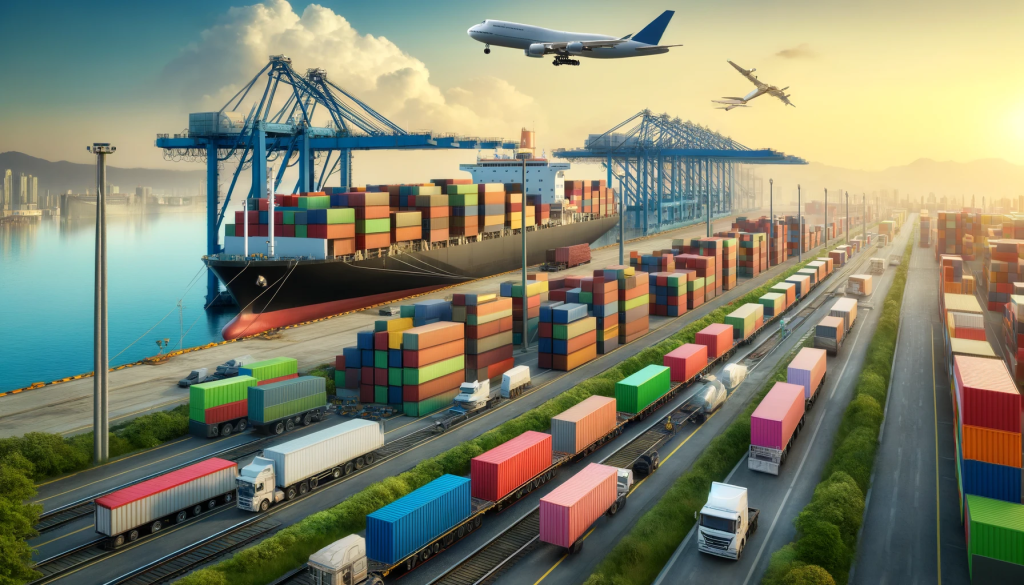
Accreditation has contributed to reductions in costs and reassessment times when products enter and leave the different markets. Accreditation ensures that standards, specifications and conformity assessment methods are the same, allowing an accredited certificate to be recognized worldwide. This reduces the cost of conformity assessment and the risk of goods or services being rejected by international trading partners. In this way, accreditation opens up export markets for domestic industries, boosts industrial development, and promotes transparency.[4]
Studies have demonstrated the importance of standards, accreditation and their effects on international trade. As an example, a study carried out by the Centre for Economics and Business Research (CEBR) in the United Kingdom (UK) concluded that standards have contributed 23% of the UK’s gross domestic product (GDP) growth over the last century[5]. On the other hand, according to the New Zealand Institute of Economic Research, accreditation represents an export premium of NZ$4.5 billion in New Zealand[6].
Additionally, accreditation bodies may choose to enter into international Multilateral Recognition Arrangements (MLAs) or Mutual Recognition Arrangements (MRAs). These agreements ensure that their signatories operate in an equivalent manner, applying the same standards and procedures. In this way, not only the equivalence of the accreditation systems of the signatory bodies (accreditors) is recognized, but also the equivalence of the activities carried out by the accredited CABs[7]. These agreements aim to reduce technical barriers to trade and facilitate the exchange of goods and services between countries.
Finally, the long-term goal of accreditation and international agreements is the fully accepted use and recognition, by both the public and private sectors, of accredited conformity assessment services among members of the agreements. This will enable the free trade objective of ‘inspected, tested and certified once, accepted everywhere’ to become a reality.[8]
[1] World Bank (n.d.) General Program – Trade. Retrieved from: https://www.bancomundial.org/es/topic/trade/overview#:~:text=Trade%20is%20an%20engine%20of%20the%20world%20economy.
[2] World Trade Organization (n.d.). Trade developments under the WTO: Practical statistics. Retrieved from: https://www.wto.org/english/res_e/statis_e/trade_evolution_e/evolution_trade_wto_e.htm#:~:text=As%20of%202022%2C%20world%20trade,at%20an%20average%20of%20209%25.
[3] Inter-American Development Bank (2020). The role of trust in the elusive quest for economic growth. Retrieved from: https://blogs.iadb.org/ideas-que-cuentan/es/el-papel-de-la-confianza-en-la-elusiva-busqueda-del-crecimiento-economico/
[4] World Bank (2019). Ensuring Quality to Gain Access to Global Markets. Retrieved from: https://thedocs.worldbank.org/en/doc/249621553265195570-0090022019/original/FullQIToolkitReport.pdf
[5] CEBR (2022). The contribution of standards to the UK economy. Retrieved from: https://www.bsigroup.com/globalassets/documents/about-bsi/nsb/cebr/bsi-uk-final-report-1.2-apr22.pdf
[6] New Zealand Institute for Economic Research (2017). Examining the way IANZ supports the New Zealand economy. Retrieved from: https://f.hubspotusercontent30.net/hubfs/20712581/Public%20Publications/Client%20reports/ianz_final_report_june_2017.pdf
[7] Entidad Mexicana de Acreditación (n.d.). International recognitions. Retrieved from: https://www.ema.org.mx/portal_v3/index.php/reconocimientos-internacionales#:~:text=THE%20MUTUAL%20RECOGNITION%20RECOGNITION%20AGREEMENTS%20,the%20same%20standards%20and%20procedures.
[8] World Bank (2019). Ensuring Quality to Gain Access to Global Markets. Retrieved from: https://thedocs.worldbank.org/en/doc/249621553265195570-0090022019/original/FullQIToolkitReport.pdf
Categories: IAF Members' news
 IAF Outlook