
Brenda Bissell
Senior Accreditation Manager
ANSI National Accreditation Board
Mary Kolberg
Communications Manager
ANSI National Accreditation Board
The most widely anticipated standard in decades, ISO/IEC 42001 Artificial Intelligence Management Systems (AIMS), was published in December 2023. As a global standard, ISO/IEC 42001 can be used by organizations of all sizes and industries, no matter if the organization develops, produces, or uses AI in its products or services. The standard is adaptable, scalable, flexible, and bridges the gap between rapidly evolving technological advancement and ethical oversight; thus, promoting a culture of responsibility and trust in AI technologies.

ISO/IEC 42001 is more than just hype; it will help reshape industries using AI worldwide. While the hype surrounding AI often outpaces its current capabilities, dismissing ISO/IEC 42001 as a short-term solution overlooks the profound long-term potential the use of AI has. Especially when you accompany the use of AI with accredited certification to ISO/IEC 42001, to better address ethical implications, ongoing research, controls for use, and collaboration across disciplines. The standard provides the foundation and a true guiding light for organizations, industry, regulators, and other stakeholders.
ISO/IEC 42001 was developed to define requirements for establishing, implementing, maintaining, and continually improving an AIMS for all types of organizations. An AI management system (MS), as defined in ISO/IEC 42001, is a set of interrelated, interacting elements for an organization, intended to establish policies and objectives, as well as processes to achieve those objectives, in response to the responsible development, provision, or use of AI systems.
ISO/IEC 42001 was intentionally written as a standard for management systems, intended for organizations aiming to implement an MS and pursue accredited certification to it. Accredited certification to ISO/IEC 42001 means an independent third-party MS certification body (CB) has verified that a company’s internal MS meets internationally recognized standards (e.g., ISO/IEC 42001). Leading the way in the AI space, ISO/IEC 42001 provides the framework and requirements for organizations to build a responsible, ethical, and trustworthy management system, and when coupled with accredited certification, the organization should be able to assure their customers consistency and effectiveness.
The standard is structured around several components that are essential for the effective management of AI systems:

AI has been rapidly penetrating multiple industries, including healthcare, defense, transportation, finance, staffing services, energy, telecommunications, and marketing, which offers a multitude of benefits. By achieving accredited certification for ISO/IEC 42001, organizations showcase their early adopter status, may gain a competitive advantage in the global marketplace, have support for government issues and demonstrate their commitment to responsible and trustworthy AI practices and ethical, transparent, and accountable AI development and usage.
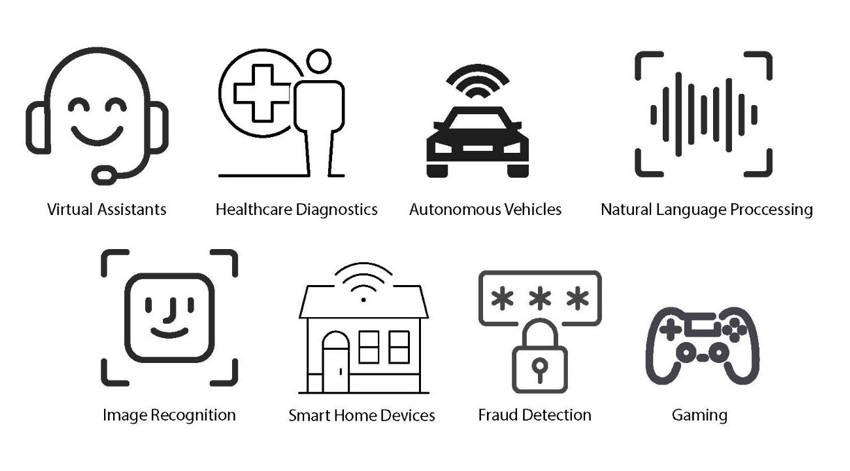
Some examples of AI products and services include:
ISO/IEC 42001 aligns with government initiatives like the U.S. Risk Management Framework and the EU AI ACT and reflects a growing global emphasis on responsible and trustworthy AI. The standard helps businesses balance innovation and governance while managing risks and opportunities.
As the use of AI continues to evolve, its impact will extend far beyond the realm of mere hype, becoming an indispensable tool for addressing complex challenges and driving innovation in the years to come. Coupled with the relevance and potential influence of AIMS accredited certification and the impact ISO/IEC 42001 will have on future regulations and compliance requirements is limitless.
Accredited certification to ISO/IEC 42001 is an answer and a roadmap for shaping a harmonized approach for responsible, ethical, and trustworthy AI governance.
Categories: IAF Members' news
 IAF Outlook
That’s a great insight; Years gone by since 1950s, there was no International standard that now ISO/IEC 42001 is here. As known, in a world of possible asymmetrical, non-homogeneous practices, this standard ‘mandates’ the AI Providers/Users to adopt to global practices in Data Quality, Policy, Roles, Objectives, AI system Impact Assessment, Control objectives and Controls (38 of them), to have effective reinsbit. Further, ISO/IEC 42001 refers to other AI standards/frameworks providing excellent insights, such as ISO 22989, ISO/IEC 5259 in DIS/FDIS stages, 24368, ISO/IEC DIS 42005, ISO/IEC 42006, NIST, OECD, ISO/IEC 27001, 27701 to enable optimized AI Management system the AI world has been waiting for. AI world is rapidly evolving to such as extent many geopgraphies have not brought in regulatory requirements other than EU for the time being. Great article from IAF !!
LikeLike