
Maria Varbeva-Daley
Accreditation Specialist – Energy, Environment and Sustainability
UKAS
Mariluz Quirós
Program Coordinator
IAF Secretariat
About COP 29
The Conference of the Parties (COP) to the UN Framework Convention on Climate Change (UNFCCC) is the annual meeting where signatories to the UNFCCC come together to discuss and adopt measures for addressing climate change. COP 29 took place in Baku, Azerbaijan from 11-22 November 2024.
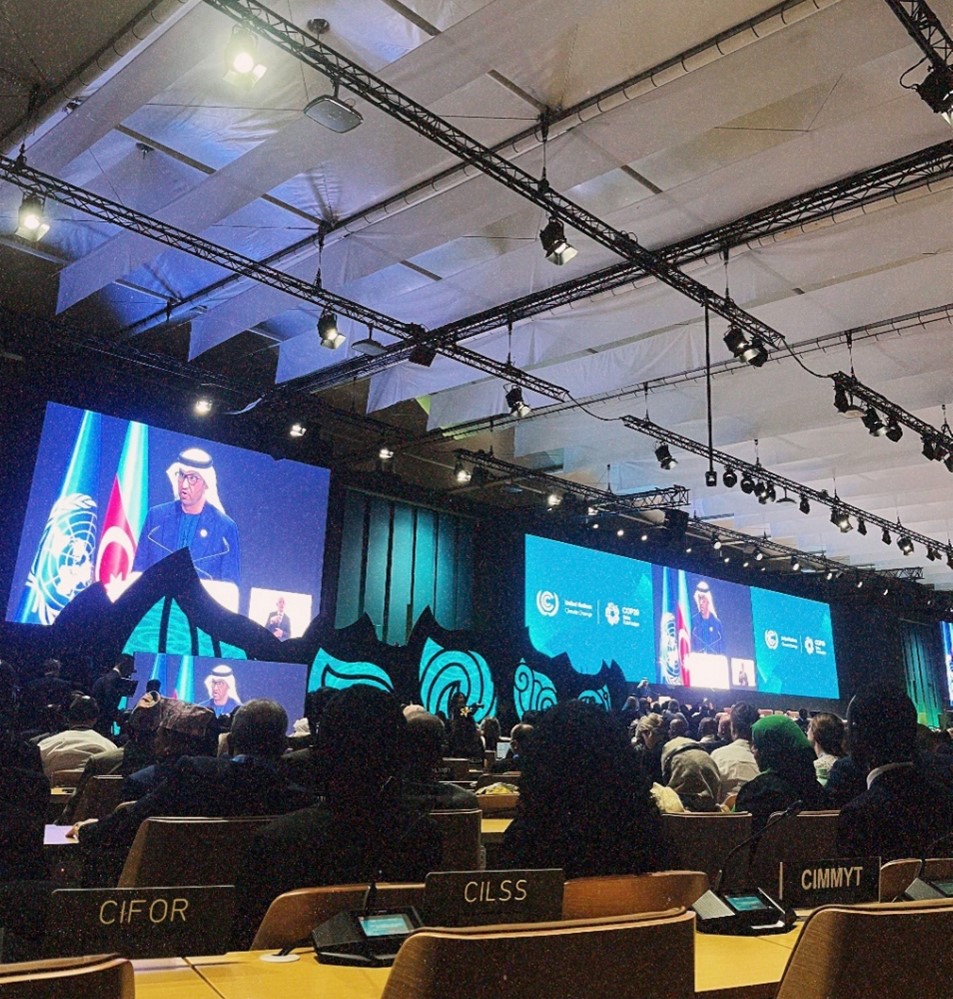
COP 29 was described as a “finance COP”, as the focus of the negotiations was on developing and agreeing on the processes for funding climate action. A new target was approved and developed economies have committed to mobilizing USD 300 billion annually by 2035. However, this amount falls significantly short of the USD 1.3 trillion needed for vulnerable economies to address the climate crisis. While the approval of this funding was welcomed as progress, it faced strong criticism from the nations most affected by climate change.
Another key challenge for the COP 29 negotiations was to define how to operationalize the Loss and Damage Fund designed to help vulnerable economies cope with climate change impacts beyond their adaption capacity. However, countries were not able to agree on key issues of the Warsaw International Mechanism for Loss and Damage review, such as voluntary guidelines on incorporating loss and damage in National Climate Plans (aka Nationally Determined Contributions [NDCs]) or details of a proposed “state of loss and damage” report.
IAF Participation at COP 29
IAF ensures its participation in COP through its members. Participation is crucial, as various negotiation tracks—such as Carbon Markets and Mitigation—are connected to Quality Infrastructure (QI) instruments and approaches. Accreditation, standardization, conformity assessment, and metrology can help parties meet national goals related to carbon neutrality, net zero, carbon markets, etc.
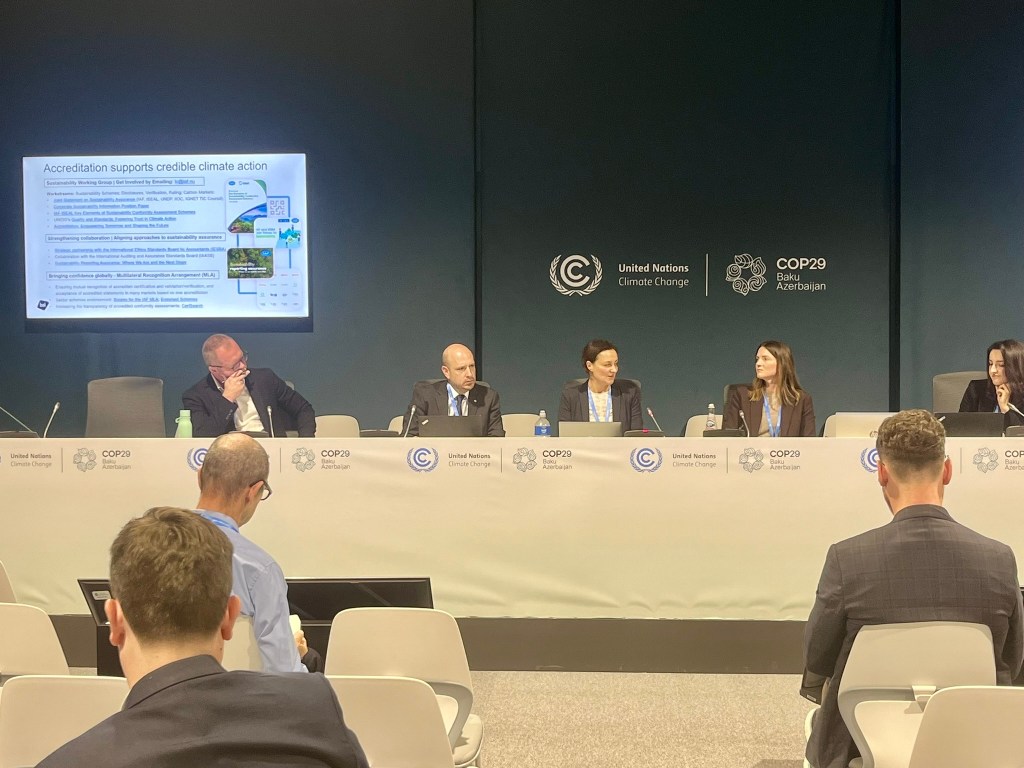
In COP 29, IAF participated in several important events. The first one—IAF’s official COP 29 ‘side event’—focused on the theme of “Building trust and scaling action through the international standards system for a just transition”. Alongside experts from the British Standards Institution (BSI), Oxford University, International Organization for Standardization (ISO) and International Electrotechnical Commission (IEC), Maria Varbeva-Daley of the United Kingdom Accreditation Service (UKAS), attending on behalf of IAF, spoke about the critical, yet often invisible, pillars of trust and credibility that accreditation offers, highlighting how accreditation bodies worldwide are already mobilizing to address the growing demand for accredited conformity assessment (assurance) against climate-related standards. This includes preparations to provide accredited assurance for the future ISO net zero standard.
The International Code Council’s “Leveraging Global Conformity Assessment Services to Verify Product Claims, Promote Resilience and Quality, and Avoid Greenwashing” event was attended by Richard Collin of UKAS. Richard joined the distinguished panel to promote the role of QI tools in scaling up credible climate actions. Richard explained how QI tools, namely international standards and accredited conformity assessment, can facilitate the implementation of climate regulations without creating unnecessary trade barriers, support the large-scale rollout of technologies, and help less developed economies gain market access on more equitable terms. Examples included planning for business decarbonization journeys, verifying data for the increasing number of carbon border adjustment mechanisms, developing green hydrogen technology, and ensuring the competence of installers for home retrofit.
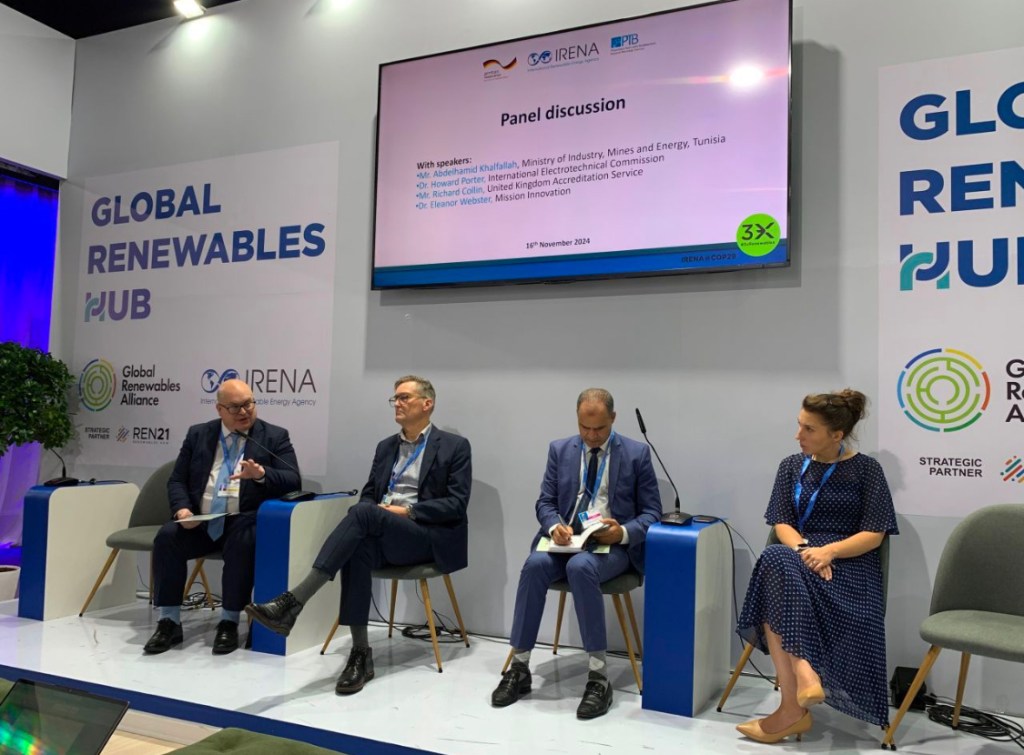
At COP 29 the International Renewable Energy Agency (IRENA) launched its “Quality Infrastructure Roadmap for Green Hydrogen”. UKAS colleagues, who had provided input into the Roadmap throughout its development, supported the launch with Richard joining IRENA’s panel to discuss the critical role of accreditation in enabling the development of robust green hydrogen supply chains.
IAF will continue to establish its presence at key international events, such as COP, to effectively share the benefits of accreditation with a wide range of stakeholders, including policy makers and regulators, aiming to develop new strategies and projects for the benefit of all IAF members.
References:
- International Climate Politics Hub. ICPH Briefings & Strategies. COP – 26 November 2024 edition.
Categories: IAF updates
 IAF Outlook